Q1 Traveler Insights: Travelers head for the sun and the slopes

Our exclusive first-party search and booking data from Q4 2024 reveals the latest traveler behaviors and trends.

Welcome to the first Quarterly Traveler Insights blog of 2025. For newcomers, each quarter we reveal exclusive traveler insights from Expedia Group’s first-party data, highlighting key demand trends and the latest traveler behaviors.

What have we seen this quarter?

Q4 2024 data shows that travelers planned farther ahead as they looked toward the new year, warm weather destinations and ski towns gained in popularity, and several new destinations made the top 10 searches in Europe, Middle East, and Africa (EMEA).

Read on to uncover more Q1 2025 travel trends and for tips and tricks about how you can use these to kick start a successful 2025.

Search volumes increase year-over-year

Our travel search trends show travelers are more eager to travel than last year, driven by a 25% YoY search increase in Asia Pacific (APAC) and 15% in North America (NORAM).¹

Here’s a breakdown of the busiest periods in this timeframe: 

  • The week of December 23 experienced more than a 10% week-over-week (WoW) search uptick as people searched during the week of Christmas and took advantage of Boxing Day sales.
  • There was more than a 20% WoW search increase the week of December 30, with 25% WoW increases in EMEA and 20% increases in LATAM and NORAM as travelers planned for the new year.
  • The week of December 2 showed strong WoW increases for NORAM travelers following the Thanksgiving holiday, as they emerge from the time spent relaxing with family and friends.

Travelers take full advantage of the holidays

Over the week of Christmas (December 23-29), international travel across all regions increased YoY, with travelers from NORAM increasing the most, with an over 10% increase. Looking at the whole holiday season (December 20-January 5), the standout destinations for each region were:

  • NORAM travel increased YoY to Japan (45%), Dominican Republic (35%), and Puerto Rico (35%)
  • APAC travel increased YoY to Vietnam (26%) and Japan (15%)
  • EMEA travel increased YoY increased to Turkey (60%) and Sweden (35%)
  • LATAM travel increased YoY increases in travel to Costa Rica (50%), the US (30%) and France (30%)

EMEA travelers made the most of the holidays as the length of stay increased by almost 30% compared to the prior 16 days.

Maximize the potential of peak moments

As demand for travel increases and searches ramp up, it’s vital to capitalize on the opportunity. But it can be a challenge to get noticed. A way to boost your chances is appearing at the top of search results in specific regions or around specific dates when you know there is high traveler appetite. A sponsored listing with TravelAds can do this.

Travelers are planning their mid-year trips

By looking at search windows – the period of time spent planning before the first day of travel – we can see travelers were using the end of the year to get ahead of planning as searches looked deeper into 2025.

  • Searches in the 31+ day window increased quarter-over-quarter (QoQ). There was a 20% increase in the 180+ day window QoQ as travelers looked toward mid-year 2025 trips. This trend was strongest in EMEA where there was a 75% QoQ increase in the 180+ day window, and domestic searches experienced a 30% increase QoQ
  • Compared to previous years, NORAM travelers increased international searches during the 14–20-day window by 15%, potentially as travelers looked for last-minute holiday getaways.
  • During the second half of November and throughout December, searches for the 91+ day window increased from earlier in the quarter as travelers looked toward 2025 vacations.

Ensure your calendar and pricing is up to date

Connect with travelers who are looking deeper into 2025 by updating your calendar and pricing. Here are eight tips on how to maximize the calendar tool to manage a vacation rental business efficiently, while hotels can leverage the competitive market insights in Rev+ to help you quickly and confidently optimize your rates.

Travelers dreaming of sun and slopes

As the weather turned cold in the Northern Hemisphere, our traveler search trends show vacationers headed towards warmer weather and the ski slopes.

Warm weather locations gain traction

Search increases from October to December

Between countries/territories

  • 210% increase from France to Mexico
  • 40% increase from US to U.S. Virgin Islands, French Polynesia, and St. Lucia
  • 40% increase from India to Thailand

To specific destinations

  • Clearwater Beach, Florida (115% increase)
  • St Augustine, Florida (80% increase)
  • Acapulco, Mexico (80% increase)

Looking at specific markets, the top hot climate destinations were Mexico City (170% increase) in EMEA and in San Lorenzo, Costa Rica (260% increase), Tecolutla, Mexico (195% increase), Piracicaba, Brazil (180% increase), and Valladolid, Mexico (160% increase) in Latin America (LATAM).

Ski town destination increases

Year-over-year

  • Big Sky, Montana (50% increase)
  • St. Mortiz, Switzerland (35% increase)
  • Niseko, Hokkaido, Japan (25% increase)
  • Aspen, Colorado (25% increase)

From October to December

  • South Lake Tahoe, California (75% increase)
  • Breckenridge, Colorado (50% increase)
  • Park City, Utah (50% increase)

The biggest increases in October to December searches from travelers specifically in North America were Big Bear Lake, California (100% increase), The Blue Mountains, Ontario (90%), while Zermatt, Switzerland saw a 60% increase among EMEA travelers.

Lean into seasonality to appeal to travelers

With travelers booking warm-weather getaways and vacations centered around winter activities, use seasonality to your advantage. Whether you’re a sunny locale or winter wonderland, you can highlight the seasonal benefits of your property or destination in your advertising to drive more demand. Vacation rental property owners should also look at setting competitive seasonal rates to take advantage of booking opportunities and maximize revenue potential.

Sporting spectacles and festival fever fuel searches

With a busy sporting calendar across the world and in a wide-range of events and tournaments in 2025, travelers started planning in Q4. Some of the big event creating spikes in searches include: 

  • A 175% increase in searches for New Orleans, Louisiana, during the week of the Super Bowl (Feb 3-9) QoQ. The places with the biggest increases were Jacksonville, Florida, Miami, Florida, Los Angeles, California, and New York, New York. 
  • A 175% YoY increase in searches for The Daytona 500 in Daytona, Florida (Feb 13-16). The uptick was driven – pun intended – almost exclusively by NORAM travelers.
  • A 50% YoY increase in searches for the F1 Melbourne in Australia (March 14-16) and an 80% YoY increase for F1 Shanghai (March 21-23). 

Festivals are also fueling bigger spikes in searches compared to last year. Searches for Austin, Texas during South by Southwest (SXSW) are up 50% YoY (March 7-15) and searches for Rio de Janeiro, Brazil for Carnival are 175% higher YoY (Feb 28 – March 4), with the increase coming from NORAM travelers

Use Flight Sponsored Listings to capture sports fans and festival-goers

Flight Sponsored Listings allow airlines to drive ticket sales and promote strategic sporting and festival flight routes using Expedia Group’s cost-per-click advertising tool. With Flight Sponsored Listings, airlines secure a premium position in search results and use custom copy to encourage sports fans and music-lovers to book.

Eyes on ramen and sushi for 2025 travel

Japan is clearly a desirable destination for 2025. Across all regions in Q4, searches for Japan increased YoY. In LATAM search increased 75% YoY while EMEA and NORAM searches increased 60% to Japan. 

Travelers interest reach beyond the major Japanese hubs as adventurers look to get away from the beaten track. Travelers in LATAM increased searches for the Hyogo Prefecture, Aichi Prefecture, and Yamanashi Prefecture all by over 75% YoY and were in the top 10 destinations. Similarly, searches from NORAM to the Hokkaido Prefecture, Hyogo Prefecture, and Aichi Prefecture all increased by over 80% YoY, with Hokkaido making the top 5 top Japanese destinations. In EMEA, search increases for the Okinawa Prefecture and Hyogo Prefecture both increased by over 80% YoY.

These spikes could be driven by a range of factors. For example, Ghibli Park in the Aichi Prefecture opened in 2022 and is attracting international travelers while Niseko in the Hokkaido Prefecture is arguably one of the world places for powder snow in the world, and the Okinawa Prefecture has amazing beaches.

Tailor experiences to emerging Asian traveler trends

Our latest study into Asian traveler trends and preferences showed Japan is the top destination for travel. To capitalize on this emerging opportunity, travel business need to tailor experiences to this emerging demographic. Read the full results and tips here.

Top destinations list for EMEA travelers features four new places

In addition to quarterly search volume and window data, we look at top destinations by region to show you where travelers are going.

Last quarter, several new places broke into the list of top 10 destinations. In EMEA, Amsterdam, Madrid, Manchester, and Stockholm emerged at the top while in LATAM, Guadalajara and Orlando broke into the list. The full lists by region are here:

Top searched destinations by region

*New top 10 searched destinations


For APAC Travelers

  • Tokyo, Japan
  • Sydney, Australia
  • Melbourne, Australia
  • Osaka, Japan
  • Seoul, South Korea
  • Gold Coast, Australia
  • Fukuoka, Japan
  • Singapore
  • Taipei, Taiwan*
  • Incheon, South Korea

For LATAM Travelers

  • Mexico City, Mexico
  • Cancun, Mexico
  • Sao Paulo, Brazil
  • Rio de Janeiro, Brazil
  • Puerto Vallarta, Mexico
  • New York, New York
  • Playa del Carmen, Mexico
  • Madrid, Spain
  • Guadalajara, Mexico*
  • Orlando, Florida*

For EMEA Travelers 

  • London, England
  • Istanbul, Türkiye
  • Paris, France
  • Dubai, UAE
  • New York, New York
  • Amsterdam, Netherlands*
  • Rome, Italy
  • Madrid, Spain*
  • Manchester, UK*
  • Stockholm, Sweden*

For NORAM Travelers 

  • Cancun, Mexico
  • Las Vegas, Nevada 
  • Orlando, Florida
  • New York, New York
  • Los Angeles, California
  • Punta Cana, Dominican Republic
  • Miami, Florida
  • Chicago, Illinois
  • Fort Lauderdale, Florida*
  • Boston, Massachusetts 

Three locations enter the top 10 vacation rental destinations for EMEA travelers

Top Vrbo destinations.

New destinations also made the top 10 Vrbo searches. For EMEA travelers, New York, New York in the United States entered the rankings at number 7, and London, England, surged into the list for NORAM travelers.²

Here’s the full list of the most-searched Vrbo destinations: 

Top searched vacation rental destinations

*New top 10 searched destinations

For APAC Travelers 

  • Melbourne, Australia
  • Sydney, Australia
  • Perth, Australia
  • Adelaide, Australia
  • Brisbane, Australia
  • Auckland, New Zealand
  • London, England
  • Waiheke Island, New Zealand
  • Paris, France
  • Canberra, Australia

For LATAM Travelers

  • Rio de Janeiro, Brazil
  • Florianópolis, Brazil
  • São Paulo, Brazil
  • Camaçari, Brazil
  • Guarapari, Brazil
  • Ipojuca, Brazil
  • Mexico City, Mexico
  • Salvador, Brazil
  • João Pessoa, Brazil*
  • Buenos Aires, Argentina*

For EMEA Travelers 

  • London, England
  • Paris, France
  • Berlin, Germany
  • Rome, Italy
  • Hamburg, Germany
  • Lisbon, Portugal
  • New York, New York*
  • Madrid, Spain*
  • Amsterdam, Netherlands*
  • Kissimmee, Florida

For NORAM Travelers 

  • Scottsdale, Arizona
  • Kissimmee, Florida
  • Nashville, Tennessee
  • New York, New York
  • Orlando, Florida
  • Paris, France
  • Las Vegas, Nevada
  • New Orleans, Louisiana
  • London, England*
  • Fort Lauderdale, Florida*

Our vacation rental predictions for 2025

In 2025, we are expecting vacation rental travelers to embrace JOMO, the joy of missing out. JOMO Travel means doing less on vacation to escape the hustle bustle of everyday life and staying at cozy cabins or peaceful beach houses to boost relaxation and reconnection. 

JOMO is just one of many trends that was revealed in Expedia Group’s data-driven assessment at what’s motivating travelers, Unpack ’25. Download the full Unpack ’25 partner report to learn more about how to take action.

¹Except where noted, all on-page data sourced from Expedia Group data, Q4 2024

²Expedia Group, Vrbo data, Q4 2024

Link to Expedia Group's Instagram page

Rapid API: The booking technology your business needs

How our customizable, competitive, and fully supported API can enhance your end-to-end lodging booking journey.

December 16, 2024

Photograph of a woman standing at the counter of a modern hotel with a suitcase and a small white dog on a leash lying beside her.

Choosing technology to expand your travel supply can be complicated, especially when you’re faced with so many options. Different audiences require different lodging options, and that’s why it’s important to choose a solution that adds valuable, high-converting lodging inventory for you and travelers.

At Expedia Group, we’ve used our rich property content, powerful technology, and unparalleled travel industry expertise to build Rapid API.

Rapid gives you access to our vast global lodging inventory and innovative technology to help you build the best shopping, booking, and post-booking experience for your audience. It also offers differentiated rates that provide value for travelers, and delivers a competitive commission for you.

To understand the full capabilities of Rapid API, we’ve pulled together an overview of why it’s the best booking technology to power your travel business.

What is Rapid API?

Rapid API enables you to distribute Expedia Group’s lodging inventory on your sites, platforms, apps, and travel technology.

With Rapid, you have access to over 750,000 properties across 310,000 destinations and more than 35 property types. You also get access to comprehensive property- and room-level descriptions and amenities, and competitive, differentiated rates that will drive travelers to book.*

Rapid is quick, light, and stable backend technology that supports the entire traveler experience, from shopping and booking to post-booking. It handles around 12 billion calls every day.** This reliability gives partners a high-performing API that ensures availability, speed, and high performance for their website and app.

Diverse businesses find Rapid API beneficial to their operations, from travel inventory aggregators and e-commerce companies to membership organizations. Traditional travel providers, including online travel agents, corporate travel managers, and air, ground, and sea suppliers also embrace the value Rapid API delivers.

“Rapid API’s inventory provides worldwide coverage with a diverse range of properties. From independent to chain establishments, and from cost-effective options to high-end luxury, we’re able to meet the needs of all our travelers.” — Bormar Huang, CEO HeyTrip

Read the case study

Why Rapid API is the best booking technology for you

Rapid API is the booking technology of choice for leading travel businesses because it is:

  • Customizable to your business
  • Competitive, with differentiated rates to offer better value for travelers
  • Fully supported, with strategic support always available

1. Customizable to your business

Thanks to a modular structure, Rapid API offers the flexibility to customize your integration so you can power all parts of the traveler journey. You can pick and choose the APIs that are right for your business now and integrate any additional APIs in the future as your needs evolve.

You can:

  • Surface the right lodging options for travelers and drive traveler confidence to book using Search, Geography, and Content APIs 
  • Offer the best rates and ensure seamless payment using Shopping and Booking APIs 
  • Support the traveler throughout the lead-up and duration of their trip with Post-Booking APIs

TAKEAWAY

This adaptability makes Rapid API ideal for hotel-focused businesses, enabling them to personalize options for travelers.

“Expedia Group’s property content is complete and of the highest quality. Every hotel has detailed descriptions from property and room amenities to photos. We have found that having great content really helps inspire travelers to book.”  — Lucy Mui, Market Manager, Switchfly

Read the case study

2. Competitive

Rapid API gives you access to property rates that travelers won’t be able to find anywhere else. Because of that, you can offer prices that keep your audience coming back for their travel needs, time after time. 

Some examples of these rates include:

  • Package rates that allow you to offer package savings to travelers when they book a flight with a hotel
  • Expedia business rates that include business-friendly amenities and greater flexibility around cancellations to address the needs of business travelers
  • B2B distribution rates from select properties that are typically equivalent to standard rates but offer higher margins

All these rates are commissionable and competitive, so for every booking, you’re also generating the revenue you need to grow your business.

TAKEAWAY

These rates are designed to give travelers the best value possible — this incentivizes them to always book their travel with you.

“Price and margin are the most important factors when it comes to supply. Rapid’s various rate types — from Package, to Business Rates, to B2B Distribution Rates with higher margins — have helped us achieve substantial growth.” — Philip Claessens, Travel technology & NDC, Omnia Travel

Read the case study

3. Backed by reliable support

Whether you have deep technical knowledge and resources or not, we’re always here to help with your Rapid API setup and operation. We’ve got over 25 years of industry experience, so you know you’re partnered with travel experts.

As part of our collaboration, you can get access to a dedicated account manager, focused on helping you grow your business with Rapid API. These account managers are extensions of your team, working as long-term partners to provide you with strategic guidance on new opportunities, including features and rates that can benefit you.

You’ll also have an integration consultant and launch manager to get you up and running quickly and reliably. Once the technology is set up, they’ll continue to suggest new ways to optimize and refine the API’s performance relative to your operations.

And in the unlikely event anything goes wrong, you’ve got always-on partner and travel support channels to resolve any issues. For travelers, this ensures a smooth experience before they leave for a trip and while they travel.

TAKEAWAY

Our comprehensive support makes Rapid API ideal for any partner, giving them the peace of mind that whatever questions they have, we’ll be there to provide answers and guide them through their API integration and management.

“Expedia Group has a lot more resources and visibility on things that we don’t. We knew that if Expedia Group had access to our business plans and vision for the future, they could anticipate our needs and begin planning for those aspects in ways we might not have envisioned.” — Austin Lowe, President, Travelpass Group

Read the case study

Photograph of two men seated in a hotel courtyard surrounded by lush greenery, engaged in conversation with their luggage nearby.

Upgrade your inventory with Rapid API

Give travelers more choice and a better booking experience with our stable, modern, and scalable technology today.

Get started

Visit the developer hub

Find out more about the technical aspects of Rapid API and how it integrates with your operations.

See the hub


*Expedia Group internal data, 2022

**Expedia Group internal data, 2024

Link to Expedia Group's Instagram page

Link to Expedia Group's Twitter page

Link to Expedia Group's LinkedIn page

Link to Expedia Group's Facebook page

How to attract travelers with data-driven tourism marketing

How to attract travelers with data-driven tourism marketing

Learn how to leverage recent data and travel tourism marketing trends to gain a competitive advantage with your next destination marketing campaign.

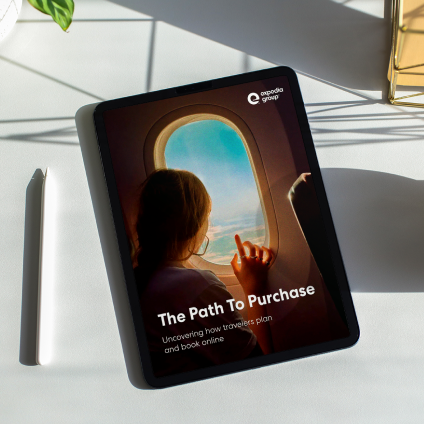
Did you know that 60% of travelers start planning their trip without a specific destination in mind?¹ Data like this can change how and when you communicate with travelers. By understanding travelers’ buying journeys from looking to booking and the latest travel trends, destination marketers can attract travelers and even shape destination decisions.


Read the report

Travel marketing along the path to purchase

As a destination marketer, you can use travel data, trends, and Path to Purchase insights to inform your strategy and get your message across clearly to your intended audience in the fragmented travel and tourism industry.

The ability to attract travelers could get more complicated if Google users opt out of third-party cookies, which is why leveraging our robust first-party data can provide the audience insights you need. Keep reading to learn how data in the Path to Purchase report and our Unpack ’25 travel trends report can give you the competitive advantage you need to create data-driven destination marketing campaigns that resonate with travelers.

Destination indecisiveness is high

Nearly three in five travelers surveyed didn’t have a specific destination in mind or considered multiple destinations when they first decided to take a trip. More than 80% of travelers from Mexico and 62% of travelers from the UK were undecided on their destination, indicating that these travelers may be even more open to destination inspiration.²

Target travelers when they’re most inspired

Nearly three in five travelers surveyed didn’t have a specific destination in mind or considered multiple destinations when they first decided to take a trip. More than 80% of travelers from Mexico and 62% of travelers from the UK were undecided on their destination, indicating that these travelers may be even more open to destination inspiration.²

To appeal to travelers’ wanderlust and price-consciousness, travel advertisers should consider showing breathtaking locations and interesting experiences along with compelling deals and clear calls to action to drive travelers to conversion. It’s also important to know how long people spend looking for vacation inspiration, so you know when to launch your campaign to attract more visitors.

Travelers spend 33 days looking for inspiration for travel destinations

We know that advertisers want to have a clear view of travelers’ buying journeys and the potential touch points they can have with travelers. That first moment, when travelers look for inspiration, is a key opportunity to influence travelers’ choices, and the window to reach people is 33 days long on average.³

Your current strategy might be to advertise to an audience that already showed an interest in your location, but the data is clear that there’s a large opportunity to create impactful ads that drive those looking for inspiration to consider new destinations — including yours.

Our destination marketing guide can help you create successful ad campaigns that drive results with more travelers.

Get the marketing guide

“It’s also important to note that two-thirds of travelers were influenced by an ad during the inspiration phase of their journey.⁴”

Path to Purchase, Expedia Group

Use a multi-channel approach to reach more travelers

Inspiration can come from many sources, like family recommendations or advertisements, so destinations need to ensure that they have a multi-channel approach to appeal to travelers during this stage. All our solutions help get your destination in front of our motivated travel audience.

If you’re looking to take your budget further, you could consider a co-op campaign. These campaigns are cost-effective and help marketers meet collective goals, and we do the heavy lifting to connect complementary destinations, hotels, airlines, and more to engage jointly with travelers and drive demand.

When it comes to connecting with travelers across channels, destination marketing organizations (DMOs) see over 80% higher engagement with our native display ads compared to standard display ads.⁵ Our native advertising solution uses contextually relevant, non-disruptive ads seamlessly integrated across our 200+ travel websites and apps. These experiential ads allow you to highlight multiple features and images with a single placement and create a pleasing experience for travelers when they’re looking for inspiration or ready to book.


VisitScotland used native advertising to engage travelers with immersive and informative ad placements across prominent homepages and hotel search results pages. By implementing native advertising, the marketing campaign generated an above average click-through rate and an 80:1 return on ad spend. The campaign’s success elevated the visibility of VisitScotland and effectively engaged qualified travelers, resulting in increased bookings.

You can also leverage in-app ads as part of our native advertising solution to gain a competitive advantage. Did you know that on average, in-app ads drive 150% more conversions than mobile web ads?⁶ This is one more lever you can pull to execute a successful marketing strategy.


Travelers use social media the most for inspiration 

Social media is where people seek authentic travel experiences and reviews when considering hotels, activities, or destinations. For travelers considering what to book, 65% of them use social media for inspiration.⁷

Drive more traffic via social media promotion

For those in destination marketing, tapping into social media as part of your mobile marketing strategy is an effective way to get travelers to consider your destination.

You could add a human touch to your mobile marketing campaigns by utilizing influencer marketing at this stage. If you’re working for a convention and visitors bureau, you can engage travelers on social media by highlighting what they could expect if they choose your destination by using captivating images and copy that highlight authentic experiences.

Discover the latest travel marketing trends

Let’s look at a few more trends that can help you learn how to promote a destination by implementing specific insights into travelers’ behaviors in your campaigns. Our Unpack ’25 study is a glimpse into eight predicted trends we see shaping the travel and tourism industry. Based on extensive data and a global survey of 20,000 travelers, the report highlights the growing popularity of alternatives to well-known vacation spots, traveling to see a concert, and booking a trip because of a movie or TV show. You can find more trends in the full study, and you can dive even deeper with our quarterly insights and research.

We’ve pulled trend takeaways to help shape your marketing campaigns and get your destination in front of our global audience of high-value travelers who are coming to dream about, research, and book travel on our trusted brands.

Read the Unpack ’25 report

Set-Jetting Destinations

Do you ever dream of stepping into the world of your favorite TV show or movie? You’re not alone. TV shows and films are inspiring travelers’ wanderlust like never before. In fact, two-thirds (66%) of travelers shared that movies, streaming services, and TV shows have influenced their travel choices. Even more telling, 36% of travelers said TV and films are more influential on their travel plans than they were last year.

From the rolling Scottish Highlands to the rugged landscapes of Wyoming, here are some of the Set-Jetting Destinations travelers are looking to visit. 


  • Dubai, United Arab Emirates
  • Wyoming
  • Montana
  • New York City
  • Cape Town, South Africa
  • Scotland

Let your campaigns set the scene for travelers

Stay up to date with trending Set-Jetting Destinations to capture traveler interest.

For airlines, consider using Flights Sponsored Listings to promote your deals to Set-Jetting Destinations and capture demand from travelers looking to explore the iconic locations they see on screen. Hotels in these destinations can lean into this trend by using TravelAds. Customize your ad listings with compelling messages and visuals that connect to memorable scenes and capture travelers’ attention to entice them to book with you.

Detour Destinations

Travelers are trading mainstream spots for hidden gems and lesser-known destinations for a taste of something new. This is driving them to switch up their travel plans, and most travelers (63%) said they are likely to visit a Detour Destination on their next trip. Think of them opting to swap the crowds of Tokyo for the charm of Fukuoka, Japan, or adding Reims, France, to their European trip itinerary. This thirst for off-the-beaten-path travel experiences is reshaping how travelers explore the world.

Below are some of the top Detour Destinations.

  • Reims, France, detour from Paris
  • Brescia, Italy, detour from Milan
  • Cozumel, Mexico, detour from Cancun
  • Santa Barbara, Calif., detour from Los Angeles
  • Waikato, New Zealand, detour from Auckland

Position your experience as the hidden local gem

Travelers want experiences that go beyond the ordinary. Inspire them to book with you by elevating unexpected offerings available at your destination in your advertising and marketing content.

For destination marketing organizations, hotels, and airlines in Detour Destinations, collaborating on a co-op campaign is a strategic way to extend your marketing spend and increase brand awareness. Highlight lesser-known attractions and cultural gems in your area to help you and your co-op partners reach travelers looking for their next great escape.    

All-Inclusive Era

Nothing says relaxation quite like an all-inclusive getaway. And these properties are soaring in popularity, with global searches using the “all-inclusive” filter on Hotels.com increasing by 60% year over year. It’s clear that the demand for all-inclusive stays is growing, and they’re quickly becoming a top choice for a stress-free escape.

These properties are also attracting a new wave of travelers, particularly Gen Z, who are drawn to the convenience and value they offer.

Dial up the details with downtime on full display

For all-inclusive properties, highlight the elevated experiences you offer. Consider using TravelAds, which allows you to customize your ad copy and spotlight the benefits and all-inclusive amenities at your property, like top-tier dining experiences and luxe spa services.

Travel brands can offer packages that combine a property with flights, car rentals, or activities to simplify the planning process for travelers and appeal to those looking for convenience. Destinations can also lean into this trend through display advertising. Incorporate images of all-inclusive resorts at your destination along to make that ultimate sense of relaxation come to life.

JOMO Travel

Forget FOMO (Fear of Missing Out) – travelers aren’t stressing over missing out on all the action and instead are embracing JOMO (Joy of Missing Out) Travel. They’re booking vacation rentals in serene destinations to escape from the hustle and bustle of everyday life, reconnect with family and friends, and fully unwind. People say JOMO Travel reduces stress and anxiety (62%) and that it enhances quality time with loved ones (47%). In a world that’s always on, JOMO Travel offers a much-needed pause.

Showcase every side to every adventure to attract more travelers

Advertising on Vrbo can help your destination tap into this growing audience looking to book their next JOMO Travel escape. Position your destination as an ideal getaway for those looking to disconnect and rejuvenate.


¹The Path to Purchase: Uncovering How Travelers Plan and Book Online, Luth Research and Expedia Group, 2023

²Ibid

³Ibid

⁴Ibid

⁵Expedia Group internal data, DMO native CTR versus standard display CTR, 2023

⁶Performance Marketing World, September 2023

⁷The Path to Purchase: Uncovering How Travelers Plan and Book Online, Luth Research and Expedia Group, 2023

Advertising in a cookieless world

December 1, 2023

Travel marketers and advertisers have been hearing for the past few years about the sunsetting of third-party cookies. It’s grabbed their attention and made headlines because for nearly 30 years, the digital advertising industry has relied on third-party cookies to gain an in-depth understanding of how digital ads perform and collect information about the people that view them.  

Third-party data, which relies on data from third-party cookies, is a well-established way for marketers and advertisers to gather information about people that visit a website, click on an ad, make online purchases, and more. The use of this data allows advertisers to target consumers based on specific behaviors. 

Image courtest of iStock

As third-party cookies are slowly being removed from web browsers — Apple’s Safari and Mozilla’s Firefox have already removed third-party cookies from their browsers and Google is planning on removing them from Chrome sometime in 2025 — travel marketers and advertisers need to be prepared to use first-party data to build strategic campaigns to effectively connect with their desired travelers. 

[Editor’s note: In July 2024, Google announced that it won’t sunset third-party cookies in Chrome after years of committing to do just that. Instead, Google is going to provide an option in its browser that will allow users to make their own tracking decisions that includes the ability for users to adjust their options at any time.]

Let’s take a deeper look into the nuances of third-party data and cookies and how these differ from first-party data and cookies.  

What is the difference between first-party data and cookies and third-party data and cookies?  

First, let’s get clarity about what a cookie is and what it does. A cookie is a file that stores data on your computer or other devices, and they’ve been around since a programmer at Netscape created them in 1994. The data that a cookie stores can include everything from web pages you’ve visited, searches you’ve conducted, whether you are logged into a site, and more.  

The difference between first-party and third-party cookies is that first-party cookies live on a particular website you visit and are used only by that domain. Third-party cookies come from other sources and can be used by a business or person who does not own the domain to collect data about visitors across multiple websites.  

For example, if a traveler visits expedia.com to look for flights to Super Bowl LVIII in Las Vegas, a first-party cookie may be delivered by Expedia Group to their desktop or mobile device. When this traveler searches for flights to Las Vegas because they’re interested in attending the game, the first-party cookie collects this data along with information like language to understand what users are doing on the website. It’s essential to understand that no external entity is authorized to sell Expedia Group first-party data for targeted advertising. Only Expedia Group, as the domain owners of expedia.com, has the authority to activate first-party data on media plans created exclusively by our team of experts.  

First-party cookies feed directly into first-party data. At Expedia Group, we share insights based on Expedia Group website activity that contain proprietary data collected from first-party cookies and other sources to examine traveler trends and behaviors; this data is derived using billions of data points from hundreds of millions of travelers across the globe on our 200+ travel websites and apps. This first-party data is relevant to travel marketers and advertisers to better understand what travelers do when planning for a trip and use these insights in their campaigns. The data also supports our targeting capabilities to help you reach the right traveler at the right point in their purchasing journey.  

When it comes to third-party cookies, the cookie functions in the same way a first-party cookie does. The difference is that third-party cookies are designed to work across a plethora of websites simultaneously, while a first-party cookie collects data only from the website associated with its first-party domain. 

Using the Super Bowl example above, if you’re a traveler interested in going to the game, other marketers will be interested in engaging with you. Third-party data can include information on your search behavior, which websites you visit, activities you book, surveys, social media, online reviews, and more. Leveraging this third-party data, retailers can use it to entice you to purchase a football jersey, a Las Vegas venue can use it to sell you concert tickets, and yes, even Expedia Group could use third-party data sources to show you travel-based on- and off-site ads that align with interests gathered from your interactions on other websites.  

The biggest pitfall with this data is that it’s collected from such a wide variety of sources that its accuracy and quality can often be hard to verify. This emphasizes why first-party data is more valuable to advertisers — they know the consumer data they receive is captured from the domain owner and no other entity.  

Why are cookies an issue? 

Generally, most people don’t mind certain types of first-party cookies because they help deliver a better user experience — cookies remember who you are, previous purchases you’ve made, or preferences that you’ve set.  

For example, let’s say you often order groceries online for delivery. When you visit the store’s website, it remembers your purchases and can prompt you with this historical data so that you don’t forget to buy toilet paper or eggs.  

Third-party cookies are a different story. This is because third-party cookies collect data from entities that don’t have a direct relationship with the consumer and the data can be resold to other parties, and frequently multiple times. Marketers typically have little to no insight into how, where, or even when the data was collected, making it far less reliable than first-party data. 

Two travel advertisers working on a cookieless marketing strategy

Consumer fatigue with third-party data collection has led to legislation in Europe and several states in the U.S. to protect consumer privacy. In Europe, the General Data Protection Regulation (GDPR) was enacted in 2016. In 2018, the California Consumer Privacy Act (CCPA) was adopted and it empowers customers to know what data is being collected about them, provides them with access to their personal data, and more. Since these consumer data protections were put in place, many other countries from Japan and Argentina to the U.K. and South Africa have instituted similar regulations.  Colorado, Connecticut, Utah, Virginia, and eight other states have also passed similar regulations.  

This has driven many companies to give users more control to comply with these laws, from allowing users to opt-in via a cookie banner to giving consumers the ability to opt-out of targeted advertising. Cookie banners and controls have become an industry standard as more regulations are put in place across the globe.  

What does this mean for travel advertisers? 

Cookieless data will have a significant impact on travel advertising. With the phasing out of third-party cookies, advertisers will no longer have access to the same level of data about consumers who don’t have a direct relationship with their company. This means that targeting specific groups of consumers based on their online behavior will become more challenging. 

As third-party cookies are sunset, advertisers will need to find new ways to target and track users across different websites and devices. This puts a lot of pressure on organizations to maximize usage of their first-party data.  

The good news is that advertisers that work with our team of experts have access to our exclusive first-party data, which always has been a core value proposition of our targetingreporting, and attribution data that provides advertisers with actionable insights for their campaigns.   

With third-party cookies all but disappearing by July 2024, first-party cookies are here to stay and will continue to be essential in delivering digital experiences to connect with travelers. We’ve been planning for a future without third-party cookies and have done the work to ensure that there won’t be any loss in identifying the various touchpoints across a traveler’s buying journey.  

To learn more about how our first-party data can benefit you, contact one of our digital advertising experts today

Accolade Care: True virtual primary and mental health care

[This article was ghostwritten for Dr. Shantanu Nundy, chief medical officer at Accolade]

At Accolade, we believe everyone deserves access to excellent primary and mental health care. That’s why we’ve launched Accolade Care 

Leveraging the primary care model at PlushCare, Accolade Care is a solution that makes it easy for your people and their families to get the support they need. We look at physical health and mental wellness from a holistic perspective to obtain optimal outcomes.  

With Accolade Care, we also want to uphold the four pillars we see as necessary in delivering quality primary care: First contact, continuity, comprehensiveness, and coordination.  

In the U.S., only about one-third of Americans have a relationship with a primary physician, which contributes to a lack of having a first point of contact for any health need. Our virtual primary care option is one way we can contribute to providing consistent and ongoing access to a primary care physician. But we don’t stop at virtual-only solutions — we bolster this by helping people schedule in-person visits when they need them to deliver the most rounded primary care solution.  

Continuity is building a long-term relationship with a primary provider; comprehensive care encompasses every aspect of a person’s well-being — the entire spectrum of care, inclusive of preventive or chronic care and a person’s mental health. Coordinated care means that a primary care physician accompanies a person throughout their entire healthcare journey.  

To solve for the shortcomings we see in the current healthcare system, Accolade Care offers an innovative approach to virtual primary and mental health care. Our providers create long-lasting relationships with their patients, supplementing in-person visits and breaking down silos that segment care delivery between physical health and mental wellness.  

Let’s look at what has fueled this demand for virtual care, how Accolade Care is not simply another telemedicine model and why we think a holistic approach to a person’s health is imperative. 

How the impact of COVID-19 boosted demand for virtual care

The pandemic highlighted the existing challenges in our healthcare system, including access to care. I saw this firsthand. As a primary physician at a clinic in Washington, D.C., when COVID was running rampant throughout the country, it didn’t take long to realize that people were putting off primary care and suffering from a host of mental health issues.  

These statistics clearly illustrate the impact the pandemic had on people: 

  • 4 in 10 U.S. adults reported that they avoided medical care because of COVID-19. 
  • 12% of people avoided urgent or emergency care. 
  • 32% avoided routine care. 
  • 31% suffered from anxiety and depression symptoms. 
  • 26% had trauma-related symptoms. 
  • 13% uptick in substance abuse. 
  • 11% seriously contemplated suicide. 

Making it more difficult, medical resources, including mental health support were re-allocated to address the pandemic. This meant that a lot of people who wanted care simply had to wait until their provider or specialist was available.  

To solve for this, within weeks my clinic pivoted from being primarily in-person to 80% virtual. When an under-resourced clinic like mine demonstrated it could shift its care offerings due to emergent — and urgent — issues, it became clear to me that we could deliver a vast amount of care virtually and embed this approach into the existing healthcare system.  

We knew this approach could work because we saw people seeking virtual care in record numbers. Nationally, 46% of U.S. consumers used telehealth in the first months of 2020, up from 11% in 2019. What’s also telling is that these virtual visits weren’t only requests for COVID tests or urgent issues, but for primary and mental health care or specialties like physical therapy. 

More than telehealth

It’s important to understand that Accolade Care is not just another telehealth solution. We didn’t want to be hamstrung with telehealth’s current limitations. Traditional telemedicine focuses on urgent or episodic health moments. It also tends to follow the fee-for-service model, which doesn’t build long-term relationships between providers and patients. We know these types of relationships are essential to benefit people’s well-being for the long term and made them a key component of Accolade Care.  

Accolade Care takes a longitudinal approach. Our providers accompany people on their entire healthcare journey and work to establish long-term relationships with them. We also have all health records in one place, so whether a provider is a primary care physician or a mental health specialist, they have a complete view of a person’s entire care needs. 

Building a holistic approach

It’s important to look at healthcare from a holistic perspective. Approaching healthcare in a silo, or treating people in a siloed manner, doesn’t benefit people — or make the system better. Our in-depth approach to primary care focuses on having providers who are well-trained so that they can help people manage everything from diabetes and heart disease to mental health and substance abuse issues.  

Our primary care physicians work closely with our mental health specialists. It’s an expansive view that doesn’t segment care; instead, these primary care providers are astute enough to assess a person’s mental health well-being to know when to bring in a mental health professional to provide the right care.  

We created Accolade Care to deliver a solution that encompassed the entire spectrum of a person’s well-being. This is our holistic approach — it doesn’t parse primary care from mental health wellness. We see this as integral to delivering high-quality healthcare. 

Delivering healthcare equity through access

In the U.S., access to quality healthcare care isn’t equitable. Those living in rural areas are hit particularly hard. It’s estimated that as many as 30 million Americans live more than 60 minutes away from a trauma center. We know that nearly 33% of adults don’t have a primary care provider, and it’s estimated that between 54,000 and 139,000 physicians will be needed by 2033 to address the population’s healthcare needs

Demand for mental health specialists is also increasing, especially after COVID. It’s projected that by 2025 there will be a shortage of up to 250,000 mental health providers. The one upside to this is that mental health professionals, who have long been in demand to meet people’s needs, have been using virtual care much longer than other providers. We can learn from the head start these professionals have to further improve access to deliver equitable care to everyone. 

We also have technology on our side. At Accolade we use smart tech and data to provide the best experience possible. Data helps our Care Team get people to the right care at the right time. And our technology makes access easy — people can get the support they need, from anywhere — all it takes is a phone call or a tap on our mobile app.  

A solution to benefit everyone

Accolade Care is yet one more way we are looking to deliver the right care at the right time. It’s a seamless solution that’s easy to access and focuses on a person’s physical and mental well-being. COVID may have highlighted the shortcomings of the healthcare system, but it also gave us the impetus to find new ways to reinvent healthcare.  

Shantanu Nundy, MD, MBA, is a primary care physician, technologist, and business leader who is the chief medical officer at Accolade. He is the author of “Care After COVID: What the Pandemic Revealed Is Broken in Healthcare and How to Reinvent It.”  

Community banks, credit unions must modernize to compete and thrive

A digital-first approach is changing the banking industry — and quickly. All you need to do is look at fintech disruptors like the peer-to-peer payment app Venmo (owned by that other late ‘90s disruptor, PayPal), micro-investment platform Acorns or the fee-free mobile banking app Chime to understand that tech-savvy consumers’ demand is forcing the banking industry to adapt.

Digital transformation has been bandied about for years, but it’s no longer a buzzword and instead is now defining how banks are using technology and modernization to meet their customers’ needs. Consumers are also demanding experiences similar to what Netflix or Amazon offers, a consistent experience across any device, and ease of use. One way to meet this is to adopt a digital banking platform.

Regardless of size, digital transformation is shaking up banking. While large, global banks are often able to invest to quickly scale to what their customers want, community banks and credit unions can be just as competitive in offering products and pricing that consumers want. How? By giving customers the experiences they want, rewarding them with personalized incentives to increase loyalty, and using personalization to meet each customer’s specific need. 

Transform your bank, products and pricing with a digital platform

In order to remain competitive, community banks and credit unions need to adopt an agile model that offers customers the services and experiences they demand.

Most smaller banks haven’t changed their business model much over the years and stuck to an in-person strategy to deliver first-class customer service that built loyalty. In the U.S. there are more than 5,000 credit unions in 2020, a decline of 2.4% since the previous year, and nearly 5,000 community banks, a number that also declined due to asset thresholds. American Banker reports that for these banks to successfully transform and modernize, there are six steps to follow, including adopting a top-down commitment to organizational change and making innovation a priority and part of an organization’s structure. These decisions reside at the top and for a bank to be successful, it needs to be embraced throughout the entire organization. 

Beyond recognizing the need to modernize, a customer-centric approach is essential. In some ways, this is intuitive — community banks have long focused on supporting their customers by investing in organizations or causes they care about, and credit unions operate as nonprofits where customers as members own the bank. In each instance, this gives these banks a unique understanding of who their customers are. What’s trickier is finding out what each customer wants.

Helping these banks better understand what their customers want and allowing them to be nimble in delivering their products, Zafin’s enterprise-wide solutions lets banks determine the products and pricing that meet market and customer demand. 

Zafin lets banks determine who their target audiences are, provide offers to meet demand, and iterate as customers evolve or new consumers enter the market. Our solutions also enable banks to quickly transform lines of business when the landscape shifts. 

For example, when the coronavirus pandemic started, community banks and credit unions were on the front line of helping small businesses navigate through a time of severe economic stress. For a community bank to be able to quickly — and positively — react to unpredictable situations is an essential way to foster customer loyalty and give customers what they want, when they need it most. 

On top of this, a recent Zafin survey showed that during the pandemic 80% said that online and mobile banking is making it easier for them. This adoption rate is projected to increase — the growing Gen Z segment, many of who are under the age of 10 and have yet to establish a relationship with a bank but are digital natives, further emphasizes why digital innovation and personalized experiences will help banks gain more customers in the future. A move to a digital banking platform is not just a solution for now, but the future as well. 

“It’s widely known that the COVID-19 pandemic has accelerated the use of digital banking tools,” Alexandra Roddy, Zafin CMO and EVP, said. “The biggest takeaway, however, is that many banks have not been prepared to match consumers’ desire for a more personalized banking experience because of their outdated legacy systems. [Our] survey shows expectations have changed, and banks now have a massive opportunity to re-evaluate how the systems they have in place may be holding them back from the modernization they know their customers want and need.”

What differentiates Zafin is that our solutions can scale to specific product delivery needs, get these products to market quickly, and use personalization technology for a customer-centric experience. This allows banks to be nimble and cost-effective when innovating to give their customers what they want, when they want it and whether it’s a situation that’s anticipated or not.

Giving customers what they want

The rise of fintechs has shown how customization of products and services can match user demands. Zafin’s solutions make it easy for banks to do the same. Beyond the need to pivot quickly because of coronavirus, our survey went more in-depth to find what consumers want. Here are some highlights:

  • 88% want their banks to provide them with relevant recommendations, but 41% say their current bank doesn’t offer them what they’re looking for
  • 86% of millennials said if they received rewards to help them meet their financial goals, whether it’s saving for a down payment on a house or reducing debt, they would expand their current relationship with a bank or move to one that offers such incentives
  • Online banking is the most important factor when Gen Z and millennials choose a bank while those near or at retirement age look for low fees
  • Nearly 8% of Gen Z does not use a bank. Banks with the foresight to prepare now for this next digitally native generation will be in a good position to establish long-term relationships. (And let’s not forget this generation comprises 68 million people in the U.S. alone.)

Every generation wants to get all the services they need from a single bank. With Zafin’s segmentation targeting and personalization technology, it’s easy for banks to identify — and meet — this demand.

Your bottom line

Time is money. That’s why Zafin’s implementation is fast, meaning that you can move your product and pricing offers quickly to the market and reap the benefits.

We’ve created an 8-step process to get you up and running quickly. Starting with an assessment, we work with you to develop a plan that fits your unique needs. We provide training, configure solutions that work for you, and test and iterate so that you can meet your goals. 

Our goal is to help your product managers get your products to market quickly and have the capabilities at hand to identify, customize and adjust to any changes in the market or consumer demand. The Zafin solution also seamlessly integrates with legacy tech stacks.

At Zafin, we’re with you every step of the way. Our suite of solutions includes easy-to-use dashboards to help you segment and target specific audiences of any size, monitor and measure, and streamline compliance by consolidating product and regulatory information into a centralized repository. 

19 ways to save on time and travel costs

At Egencia, we take travel seriously. We don’t play games or tell travel managers to dangle carrots in front of their business travelers to get them to comply with policy. Instead, we provide a single, easy-to-use corporate travel platform that will help your business save time and money — no gimmicks needed.

Let’s face it — money matters to every business and time is valuable. Whether you’re a global organization or a small or medium-sized business, with our business travel technology you can build and monitor a travel program that eliminates guesswork. Our platform meets your specific needs when it comes to travel spend, expenses, and compliance. You can save time with up-to-date reports, streamline travel expense processing, and easily book travel from any device.  

Here are 19 ways we can help you save time and money:

1. Negotiate the best business trip rates

We offer a huge supply of travel options, with exclusive, preferred rates, across the globe. How do we do this? As part of Expedia Group, we have extensive scale when it comes to what we can offer. Whether you’re booking travel in one region or worldwide, we can accommodate complex travel programs or offer solutions for your specific business needs. And you don’t need to worry about having suppliers in every region where your travelers need to go — our supply is open to all of our customers.

As a bonus, the variety of travel options aren’t limited to hotels, so your travelers can choose from a wide selection of air, car rental, and rail. Our technology surfaces the most relevant content — meaning that you, and your travelers, save time. No more sorting through endless lists of irrelevant travel options or multiple booking tools — you save time and keep business travelers happy with choices that matter to them.

2.  Boost travel policy compliance

We’ll help you structure a managed travel program that achieves compliance. Think of the time you’ll save if you don’t have to chase down travelers that go rogue. And think of the travel spend you can save if you have a travel policy that makes it easy for travelers to stay in compliance. On top of that, you can control costs even more by setting spending caps in your policy, making saving money and compliance a breeze. 

In our experience, we’ve found that if travelers can use a clear, easy-to-understand corporate travel policy that suits their travel needs, they’re likely to be happier. Traveler satisfaction can help you retain highly valued road warriors or it can be touted as one of your company’s benefits when speaking with potential employees.

4. Airfare savings

Savings Finder for Air constantly searches for lower-cost flights and alerts you when savings are found. How much can you save? We’ve been able to deliver average savings of $170 per plane ticket in the US and an average of $660 in EMEA and APAC. 

5. Save money on hotels

Beyond saving money on airfare, you can also realize more savings when it comes to hotels. We always provide you with the best preferred rates, and our Air and Hotel packages help you save even more when you book flights and hotel rooms within 10 days. What’s even better is that these savings are surfaced to you — there’s no need to hunt and peck to cobble together the most cost-effective package for your travelers. 

The savings don’t stop there. Our Savings Finder for Hotel eliminates the frustration of seeing room rates drop after you book. Using machine learning (ML) to search for price drops, we’re always on the lookout for ways to save you money. If we find a rate that’s at least $10 less than your original booking, we’ll automatically book the lower rate for you — you don’t need to lift a finger — and we’ve been able to save our customers an average of $37. We also know that things can change at the last minute, and that’s why you can save up to 70 percent on last-minute bookings with the Egencia mobile app.

6. Simplify the browsing experience

Technology is in our DNA. It’s been the driver of everything we’ve built, and we constantly iterate and innovate to deliver the best single business travel platform to you.

We’d like to introduce you to Smart Mix, which uses ML to provide you the best hotel and air sort for your business. What does this mean for booking flights and hotels? You’ll get the most options that meet your policy, with personalized choices and rates surfaced to the top.

How do we do this? Essentially, with ML, we train artificial intelligence (AI) to find patterns in our data. We have billions and billions of bytes of data, and what AI does is find repeated data points that wouldn’t be obvious to humans who can’t process that much data quickly. This makes the entire travel management system more predictive and action oriented.

With this technology, we can give you what you want as your first choice — that’s the power of ML and AI. For example, let’s say you have a bi-annual event every year, one in Berlin and one in San Francisco. Our ML knows what hotel chains, flight times, and ground transportation options your travelers prefer, so those results are what you see first.  

7. Connect with your hotel — before check-in

When your travelers are on the road, time is of the essence. Between getting to the airport and catching a flight or a connection, the last thing they need is to try to figure out how to get to their hotel, grab a bite to eat, or log on to Wi-Fi in their room. Hotel Conversations lets business travelers speak directly to the hotel, so they can find out if there’s a shuttle at the airport, if the hotel has a restaurant, and if Wi-Fi login information will be in their room when they arrive.

8. Drive online booking adoption

With an online adoption rate of more than 90 percent, we return productivity to you through our intuitive booking platform that’s easily accessible from any device.  

9. Travelers get help when they need it, wherever they are

It’s a given that when people are on the road, things don’t always go as planned. We’re here to help your travelers with always-on customer service, 24/7 every day of the year. The mobile app features AssistMe with callback functionality and our highly trained consultants can help with complex travel itineraries. We also offer native language support with customer support teams that speak more than 30 languages.

10. Monitor your travel spend

The value of ongoing and consistent reporting is important to anyone managing a travel program. The Egencia Analytics Studio is an easy-to-use data visualization tool that lets you constantly monitor your business travel budget and keep a close eye on your spend. It’s easy to zero in on what your travel spend is, day-to-day, month-to-month or year-over-year. You can gain insights on how you can save money and look at spending trends to analyze and implement in your program.

11. Find your travelers, wherever they are

Taking care of your travelers is important to you, them, and your business. Ensuring your travelers are safe also helps your bottom line. In the event you need to quickly locate your travelers, Traveler Tracker lets you search by city or a specific region on a map. Whether it’s a weather system that could disrupt travel plans or a rail workers’ strike, finding and alerting your business travelers to any potential impacts is at your fingertips. And if you need to find out where your travelers have been, you can also take a rearview 30-day look at their travel. 

12. Alert business travelers

We help your business travelers stay one step ahead of any travel changes or last-minute updates with flight alerts, so you don’t have to. Your travelers also have the option to use Online Air Exchange, a platform feature that allows them to change flights on the web or in the app, with instant visibility to any changes in fares or penalties. 

13. Integrate with HR and expense systems

We make it easy to adopt a travel management program, which means you can save time and money. Simply set up your travel policy and integrate it with HR and your expense system with a few clicks. Your travel program dashboard will provide you a complete view of your company’s savings, spend, and travel trends.

14. Manage business travel expenses

Managing travel expenses across multiple credit card receipts and reconciling accounts can be time-consuming and tedious. We offer streamlined, end-to-end expense processing with multiple providers to free up your time and your travelers’.

15. Save in bulk

Group Trip is a collaboration platform feature that saves time by alerting a specific number of people simultaneously instead of creating a back-and-forth email chain. It’s easy to view and book similar flight times and hotels and track group arrival times for coordinated (and cost-saving) ground transportation.

16. Streamline approvals

Out of the office and need to modify or make travel arrangements? With just one tap, trips are approved with Arranger Mode.

17. Hire expert help

Let our travel management consultants provide expert advice and help you assess your travel program to find potential savings, streamline operations, suggest ways you can make your travel program more sustainable, and manage your hotel RFP program.

18. Save with value-added partnerships

We go way beyond booking and offer services you and your travelers need the most on the road. The Egencia Advantage program is a one-stop shop that provides access to AirHelp, insurance, visa services, and more.

19. Get the best rates

Optimize your travel program and fine tune your policy by finding hidden savings. It can be appealing to cut back on travel by simply curbing spend, but there are smarter ways to save. 

With Egencia Analytics Studio, you can analyze your travel data and find saving opportunities with our Benchmarking dashboard. The Benchmarking dashboard lets you look at hotel destinations by spend, negotiate rates with hotels that meet your eco-friendly goals and look at top airline routes. You can also measure your travel spend against that of similarly sized companies. Armed with this data, you can approach suppliers with confidence to renegotiate rates.

Travel expenses are part of the cost of doing business, and it can be challenging to navigate the business travel landscape on your own. At Egencia, we’re a travel management company that makes sure you get the most out of your investment. We have all the travel spend management services and support you need to determine how to realize corporate travel savings during times of crisis or how to optimize your travel management program.

What is corporate travel management?

No matter what industry you’re in, every aspect of your business requires planning, organizing, and analysis. One of these aspects is business travel — and that involves a lot more than booking. From logistics and travel spend to tracking your travelers and monitoring travel expenses, a lot goes into creating a successful corporate travel program.

The advantages of having a managed business travel program are extensive. Beyond tracking and managing your travel spend, a well-executed program also helps you ensure your business travelers are safe, provides them with personalized travel options, and empowers travelers to book and update their travel at their desk or on the go in the mobile app. A managed program should also give you the technology you need to gain in-depth data insights so that you can optimize your program to increase compliance, find new savings opportunities, save time, and more.

What are the benefits of a managed business travel program?

Travel programs are beneficial to businesses of all sizes. A growing business needs a travel management company (TMC) that will support its corporate travel program so they can scale and evolve. A global organization needs a business travel management solution that can be tailored for each region where they conduct business so that local requirements and travel options are centralized and easy to find. This also means each area can be measured for compliance, costs, spending caps, and more.

At Egencia, we help corporate travel managers in a number of ways, including:

  • Providing tools to create a travel policy that meets the business’ ROI goals by monitoring and forecasting travel spend. A well-crafted policy also helps you increase compliance — and when compliance goes up, costs go down.
  • Savings opportunities at 35,000 hotels with Egencia Preferred Rates. Last-minute mobile-only deals that can save you up to 70 percent and access to an extensive travel inventory from Expedia Group to find the options that fit your travel budget.
  • Optimization reporting from Egencia Analytics Studio to find more savingsThe Benchmarking dashboard lets you measure your spend against other, similarly sized businesses to use this data to negotiate better hotel and airfare rates.
  • Data visualization dashboards make it easy to pull reports on your most traveled routes by individuals or groups, find your CO2 footprint, and understand the impact of global travel situations like COVID-19.

Need help building a travel policy? Use our free guide.

How do travel management software and technology help?

When it comes to managing travel, technology matters. This holds true as much in the workplace today as it does in your personal life. Booking business trips should be as frictionless as booking a vacation. We understand this — Egencia was the original innovator in digital corporate travel. We built and own the technology we use for business travel management, allowing us to innovate quickly and deliver a complete and seamless end-to-end travel experience that delights travelers and travel managers.

Egencia meets all your travel needs to help you create and manage a successful corporate travel program. Easily manage traveler profiles, payment options and travel policies, or use risk management tools like Egencia Traveler Tracker to help you locate business travelers in case of an emergency. With everything in one place, it also makes approving and travel booking processes simple — there’s no need for multiple online booking tools or complicated approvals. And you can make booking, company policy updates and approvals from wherever you are, across any device.

Travelers on the road will get alerts in real-time if anything that could disrupt their travel happens. If they need help, they can use Egencia AssistMe and get a call back within a few minutes. Our expert travel consultants use the same tools as travelers and arrangers so they can view any traveler’s complete itinerary to resolve any issue and get them back on the road as soon as possible. These experts provide support around the clock, every day of the year, online or off.

What role does travel data play?

An abundance of business travel data from Egencia and Expedia Group fuels our technology; machine learning uses what we know about corporate travel policies, booking histories, property preferences, travel industry benchmarks, and a host of other information to create compelling, relevant travel choices. Travelers can find in-policy options at the top of their search, making policy compliance easy, encouraging traveler satisfaction, and keeping travel costs under control.

As part of Expedia Group, we can deliver the benefit of having the same choices and prices your travelers would get on Expedia.com or Hotels.com alongside specifically negotiated corporate rates corporate. Egencia Preferred Rates offer your travelers better value flights and hotel stays with exclusive rates that aren’t available to other TMCs and include amenities like flexible cancellations, breakfast, and Wi-Fi.

Corporate travel management from Egencia

Travel management services should help you gain efficiency in your travel program, save time and money, take care of your travelers, get around-the-clock customer support, and provide you with actionable data.

At Egencia, we’re always here for our customers, from onboarding to helping them navigate travel disruptions. Find out how corporate travel expertise from Egencia can help you have a successful travel program.

What is corporate travel management?

No matter what industry you’re in, every aspect of your business requires planning, organizing, and analysis. One of these aspects is business travel — and that involves a lot more than booking airline tickets and hotels. From logistics and travel spend to tracking your travelers and monitoring travel expenses, a lot goes into creating a successful corporate travel program.

The advantages of having a managed business travel program are extensive. Beyond tracking and managing your travel spend, a well-executed program also helps you ensure your travelers are safe, provides them with personalized travel options, and empowers travelers to book and update their travel at their desk or on the go in the mobile app. A managed program should also give you the technology you need to gain in-depth data insights so that you can optimize your program to increase compliance, find new savings opportunities, save time, and more.

What are the benefits of a managed business travel program?

Travel programs are beneficial to businesses of all sizes. A growing business needs a travel management company (TMC) that will support its corporate travel program so they can scale and evolve. A global organization needs a business travel management solution that can be tailored for each region where they conduct business so that local requirements and travel options are centralized and easy to find. This also means each area can be measured for compliance, costs, spending caps, and more.

At Egencia, we help corporate travel managers in a number of ways, including:

  • Providing tools to create a travel policy that meets the business’ ROI goals by monitoring and forecasting travel spend. A well-crafted policy also helps you increase compliance — and when compliance goes up, costs go down.
  • Savings opportunities at 35,000 hotels with Egencia Preferred Rates. Last-minute mobile-only deals that can save you up to 70 percent and access to an extensive travel inventory from Expedia Group to find the travel options that fit your budget.
  • Optimization reporting from Egencia Analytics Studio to find more savings. The Benchmarking dashboard lets you measure your spend against other, similarly sized businesses to use this data to negotiate better hotel and airfare rates.
  • Data visualization dashboards make it easy to pull reports on your most traveled routes by individuals or groups, find your CO2 footprint, and understand the impact of global travel situations like COVID-19.

Need help building a travel policy? Use our free guide.

How does travel technology simplify business travel management?

When it comes to travel management, technology matters. This holds true as much in the workplace today as it does in your personal life. Booking business travel should be as frictionless as booking a vacation. We understand this – Egencia was the original innovator in digital corporate travel. We built and own the technology we use for business travel management, allowing us to innovate quickly and deliver a complete and seamless end-to-end travel experience that delights travelers and travel managers.

Egencia gives you everything you need to create and manage a successful corporate travel program. Easily manage traveler profiles, payment options and travel policies, or use risk management tools like Egencia Traveler Tracker to help you locate business travelers in case of an emergency. With everything in one place, it also makes booking and approving travel simple — there’s no need for multiple travel booking tools or complicated approval processes. And you can make booking, policy updates and approvals from wherever you are, across any device.

Travelers on the road will get alerts if anything that could disrupt their travel happens. If they need help, they can use Egencia AssistMe and get a call back within a few minutes. Our expert travel consultants use the same tools as travelers and arrangers so they can view any traveler’s complete itinerary to resolve any issue and get them back on the road as soon as possible. These experts provide support around the clock, every day of the year, online or off.

What role does travel data play?

An abundance of business travel data from Egencia and Expedia Group fuels our technology; machine learning uses what we know about corporate travel policies, booking histories, property preferences, travel industry benchmarks, and a host of other information to create compelling, relevant travel choices. Travelers can find in-policy options at the top of their search, making policy compliance easy, encouraging traveler satisfaction, and keeping travel costs under control.

As part of Expedia Group, we can deliver the benefit of having the same choices and prices your travelers would get on Expedia.com or Hotels.com alongside specifically negotiated corporate rates corporate from Egencia. Egencia Preferred Rates offer your travelers better value flights and hotel stays with exclusive rates that aren’t available to other TMCs and include amenities like flexible cancellations, breakfast, and Wi-Fi.

Corporate travel management from Egencia

Corporate travel management should help you gain efficiency in your travel program, save time and money, take care of your travelers, get around-the-clock customer support, and provide you with actionable data.

At Egencia, we’re always here for our customers, from onboarding to helping them navigate travel disruptions. Find out how corporate travel expertise from Egencia can help you have a successful travel program.


Kaspersky’s global travel program

Company: Kaspersky

Industry: Cybersecurity

Kaspersky, a global cybersecurity company, struggled with consistent definition and enforcement of its corporate travel policies. The Egencia travel management platform and online resource center enabled Kaspersky to gain increased global and regional policy compliance as well as better communication and consistency in its travel program.

Kaspersky is one of the world’s pre-eminent cybersecurity companies and its travel managers oversee a corporate travel program of significant scope. The international company has more than 30 offices globally and supports more than 400 million users with 270,000 corporate clients.

Managing a global ecosystem of this scale means that many Kaspersky employees are frequently traveling internationally. This includes people from the company’s Moscow headquarters who need to go to North and South America, Africa, Asia, and Europe. Employees at numerous local offices must also travel regionally and internationally to support the company’s far-flung operations.

Challenge: Achieving consistency in policy compliance

Kaspersky’s corporate travel program is based on two levels of policy. Global policy affects everyone in the company and sets the maximum limits for travel, accommodation, and per diems. It defines what’s reimbursed and what isn’t, who can and can’t book business class airfares, and so forth.

The second level of travel policy focuses on regional or local policies that are defined for specific regions and countries. These policies reflect regional nuances and specifics and take into consideration cultural differences in various parts of the world. Local policies also include local legal and financial compliance. The local travel policies can be seen as more rigid than the global policy since none of those policies can conflict with the global policy. For example, if the global policy states that something isn’t allowed, then the local policy can’t allow it either.

“One of our main motivations for this dual global/local approach is to create a fair environment, where everyone feels as if they are being treated the same way,” Irina Kostyukova, head of business travel at Kaspersky said.

“We also want to keep compliance high, which is only realistic if policies are flexible to address local needs. If we didn’t have a global policy, local policies could go separate ways — it would be chaos. On the other hand, if we had just a global one, we could not cover all the specific local requirements. From my perspective, a multinational company needs both types of policies.”

The challenge Kaspersky faced was one of consistency in policy definition and enforcement. Kostyukova’s goal was for the travel policies to be clear, realistic, and simple to follow. All employees of a multinational company should (in an ideal situation) get the same experience and level of service when it comes to business travel. But this wasn’t easily accomplished when the company first set out to implement its travel policies. Compliance was an issue, which became a source of frustration for Kostyukova.

“If two employees from different countries are checking into a hotel and see that their stays are booked at different rates, this can cause all sorts of problems from a policy compliance perspective,” she said.

“Similarly, if one of them can pay for their stay using a corporate card while the second one has to pay with his personal credit card, you will have trouble. The second traveler might just avoid booking the corporate rate next time.”

The issue of consistency comprised a number of related challenges. One problematic area for Kaspersky was travel-related communication and education. The company’s employees often didn’t know the details of policies or had forgotten them. Maintaining a consistent travel policy also relies on good relationships with travel managers in the other regions.

“It is very important, nearly imperative, to keep open, full communication with travel managers in different regions,” Kostyukova said. “This ensures that we are all working together to provide the safest and the best quality service for our travelers. We have to discuss different new ideas and the ways to handle problematic situations.”

Solution: Increased compliance with clear communication of travel policies

To achieve travel policy consistency — along with the business outcomes provided by such consistency — Kaspersky built an intranet portal that contained its global travel policy information so that travelers could find the information they needed to stay complaint. When it came to building a robust international travel program, Kaspersky was able to use our platform to implement the specifics they needed in their travel policy to meet their needs on a global and regional basis.

The Kaspersky travel program now enables its employees to book travel and easily stay in policy. It’s able to answer virtually all travel-related questions. If a traveler doesn’t know how to book a trip, or a part of a trip, the internal knowledge base gives them the answers they need.

The platform is tuned for local travel. For instance, based on Kaspersky’s requirements, travelers in a particular region see specific hotel chains or regional air carriers available for their trips. There’s also global transparency — using the intranet portal a traveler from one country can see how it works in another — and that “creates a sense of community,” Kostyukova said.

Results

Now, Kaspersky travelers have the same booking experience wherever they’re located, regardless of destination. “This is important, not just for the booking experience, it’s important for the whole travel experience,” Kostyukova said. 

Our platform has delivered a number of additional benefits to Kaspersky. These include more combined air and hotel approval requests, which reflects an increase in compliance as more travelers are booking hotels according to global and local policies.

The platform has also enabled Kostyukova’s team to consolidate travel vendors. “When it comes to our business travel program, minimalism is the key,” she said. “We should have as few service providers as possible, for air, hotels, taxi, payment solutions, and so forth.”

This makes it possible for the company to get the best rates and keep things simple and consistent for their travelers. It’s also easier to establish standard levels of service across the world and troubleshoot issues if they arise.

Data is a common thread across the Kaspersky platform experience. “I’m fan of data,” Kostyukova said. “I love to work with it. I love seeing how figures can show what is happening, where we are going, what the trends are. I use it to generate different types of reports like compliance reports, global travel reviews, and more. This data is a great support for me.”

Working with Egencia, Kaspersky has been able to develop and implement a travel program that addresses its need for policy consistency.